
What Happens If You Do Not Change a Water Filter for Two Years?
If a replaceable water filter has not been changed for two years, it may be far beyond its intended service cycle. The filter can become clogged with trapped material, adsorption media can become exhausted, water flow may decrease, and the system may no longer reduce contaminants as originally rated. However, two years is not the correct replacement interval for every system. Filter life depends on the exact equipment, water use, water quality, and manufacturer instructions.
One important point is easy to miss: a filter can be overdue even when the water still looks, smells, and tastes normal.
If you do not know when your system was last serviced, identify the equipment and replacement cartridge before assuming it is still performing as intended.
Does a Water Filter Really Stop Working When It Gets Old?
A filter does not necessarily fail all at once. Its performance usually changes as material accumulates or the filter media reaches its capacity.
Many filters work in one or both of two ways:
- Mechanical filtration physically traps particles in small pores.
- Adsorption causes substances to attach to the surface of media such as activated carbon.
As a mechanical filter loads with sediment, its pores become increasingly restricted. As adsorptive media fills, fewer available sites remain to capture the substances the filter was designed to reduce.
That creates two very different situations.
A physically clogged filter may announce the problem through slower water flow. An exhausted carbon cartridge may provide much less obvious evidence.
What Happens Inside an Overdue Water Filter?
The Filter Can Become Clogged
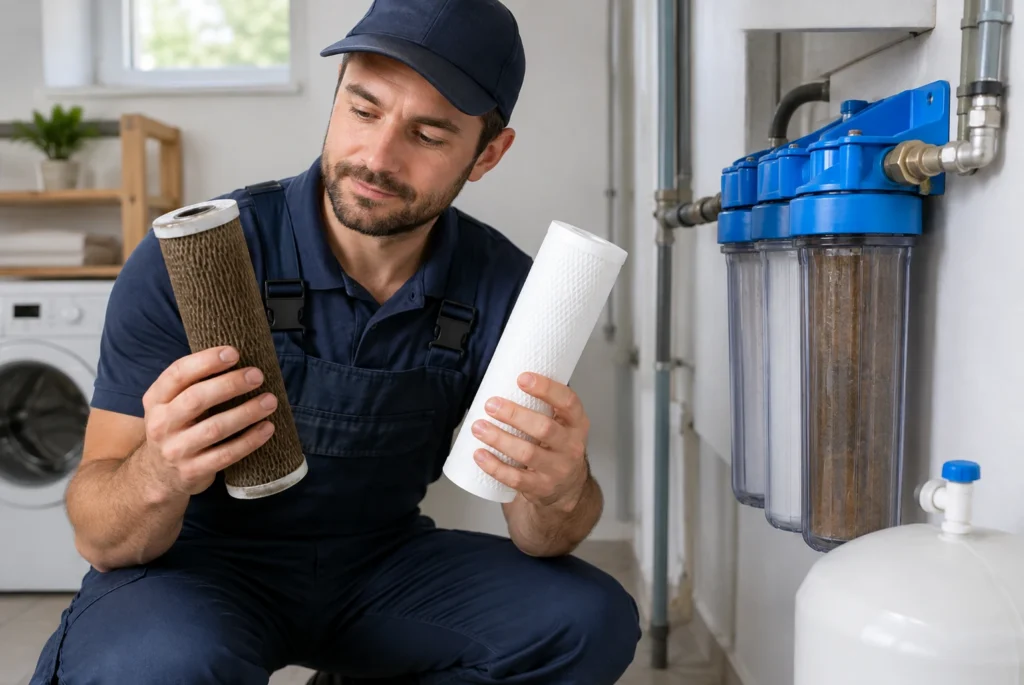
Sediment filters collect physical material such as:
- Sand
- Silt
- Rust particles
- Other suspended debris
Over time, the trapped material restricts the passages through which water flows.
One of the clearest signs of a loaded mechanical filter is reduced flow through the system. NSF notes that heavily clogged filters can restrict water movement enough to produce a noticeable drop in flow.
For a whole-home system, that may be noticed as reduced flow downstream of the filter. For a drinking-water system, the dedicated faucet may begin filling a glass more slowly than it used to.
Adsorption Media Can Become Exhausted
Activated carbon and similar media work differently.
Rather than simply trapping visible particles, contaminants attach to available surfaces within the media. Eventually, those surfaces reach their capacity.
The problem is that you may not be able to see when this happens.
A carbon filter can look essentially the same from the outside while its ability to reduce a particular substance has declined. That is one reason manufacturers specify a service cycle rather than telling homeowners to wait until the water looks different.
Performance Can Decline Before You Notice Anything
Some water problems create obvious symptoms. Sediment may be visible. Chlorine-related taste or odor may return.
Other contaminants are not detectable by sight, taste, or smell.
EPA specifically warns that a filter used beyond its service life may become less effective at reducing lead. EPA’s current PFAS guidance likewise emphasizes replacing filters according to manufacturer schedules so they continue to perform as intended.
“The water still tastes fine” is not proof that a filter is still providing its certified contaminant reduction.
What Are the Signs That a Water Filter Is Overdue?
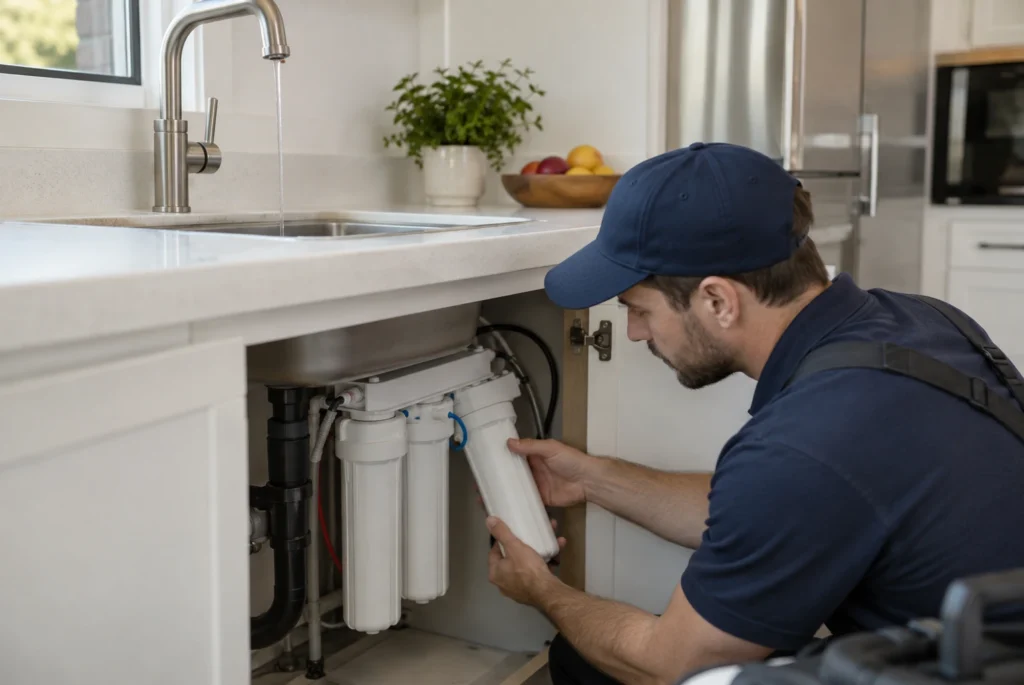
Common warning signs can include:
| What you notice | What it may indicate |
| Slower water flow | Cartridge may be physically loaded |
| Pressure drop downstream | Filter may be restricting water movement |
| Taste or odor returns | Adsorptive media may be exhausted, or another water problem may be present |
| Sediment becomes visible again | Filter may be overloaded, damaged, or bypassing |
| Filter-life indicator is overdue | Rated service cycle has been reached |
| Known gallon or time limit has passed | Manufacturer replacement point has been exceeded |
| No service records exist | Current filter condition and age are unknown |
| No noticeable change | Filter can still be overdue |
The last item matters.
Not every expired filter provides a warning you can taste, smell, or see.
Can an Old Water Filter Make Your Water Worse?
This question needs some nuance.
An overdue filter can become less effective, restrict water flow, or allow the water-quality problem it was intended to address to return. Whether it makes the water worse than the untreated supply depends on the filter type, system condition, water quality, and how the equipment is designed.
It is therefore too broad to say that every old filter:
- Becomes full of dangerous bacteria
- Dumps contaminants back into the water
- Makes drinking water toxic
- Becomes unsafe at exactly one replacement date
Those claims depend on the equipment and conditions.
What can be said confidently is that performance beyond the manufacturer’s rated service life should not be assumed. NSF recommends changing the correct replacement cartridge according to the manufacturer’s specified service cycle.
Can a Dirty Filter Reduce Water Pressure?
Yes. A physically clogged filter can restrict flow through the filtration system.
Imagine water moving through thousands of small pathways inside a filter. As sediment occupies more of those pathways, water has less open area available.
That can lead to:
- Slower drinking-water flow
- Reduced flow downstream of a whole-home filter
- Longer fill times
- Increased pressure drop across the cartridge
This does not mean every pressure problem comes from a filter. Plumbing restrictions, pumps, pressure tanks, valves, and other equipment may produce similar symptoms.
But if pressure or flow declines gradually and the filter is badly overdue, the filter is an obvious maintenance item to investigate.
Homeowners using whole-property filtration can review the company’s information on whole-home filtration options.
Can an Expired Filter Stop Removing Contaminants?
A filter can become less effective after it exceeds the service life for which its performance was established.
EPA makes this particularly clear for lead-reduction filters. The agency advises following manufacturer replacement directions because an expired cartridge may become less effective at reducing lead.
The same principle applies more broadly: contaminant-removal claims should be tied to the specific filter, certification, rated capacity, and maintenance requirements.
A filter might be designed or certified to reduce:
- Lead
- Chlorine
- Certain PFAS
- Particular VOCs
- Sediment
- Taste and odor
- Another specified substance
But not every filter reduces every contaminant, and its rated performance assumes proper use and maintenance.
If you rely on filtration for a specific water-quality concern and maintenance is badly overdue, consider water testing when filter performance is uncertain rather than judging the system by taste alone.
Is Two Years Too Long for Every Water Filter?
No. There is no universal replacement interval that applies to every water-treatment system.
“Water filter” describes several types of equipment.
Drinking-Water Cartridges
Under-sink systems may contain carbon, particulate, specialty, or combination cartridges.
These usually have a defined service cycle based on:
- Time
- Gallons treated
- Or both
Follow the instructions for the exact system.
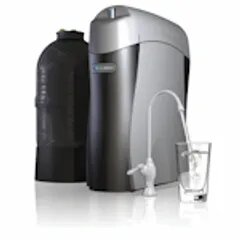
Reverse-Osmosis Prefilters and Postfilters
A reverse-osmosis system may contain several components:
- Prefilter
- Carbon filter
- RO membrane
- Postfilter
- Specialty cartridge
These components do not necessarily have identical replacement schedules.
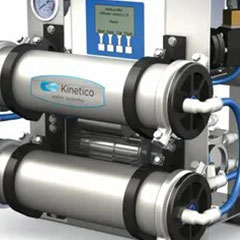
Advanced Water Systems currently lists filtration and reverse osmosis among its drinking-water services, and its Kinetico information includes systems with filter-life monitoring features.
Readers can review the company’s drinking-water filtration and reverse-osmosis systems, but the replacement schedule should come from the current instructions for the exact model.
Reverse-Osmosis Membranes
The membrane is different from a normal disposable carbon cartridge.
Its replacement schedule may depend on:
- System design
- Pretreatment
- Water chemistry
- Usage
- Membrane condition
Do not automatically replace an RO membrane simply because a prefilter was overdue.
Whole-Home Disposable Cartridges
Some whole-home filters use replaceable cartridges.
Their life can vary significantly depending on:
- Sediment load
- Filter size
- Household demand
- Water source
- Cartridge type
A heavily sediment-laden well could load a cartridge differently from a relatively low-sediment municipal supply, but water source alone does not establish the replacement schedule.
Backwashing Filters
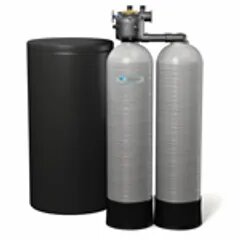
Some whole-home treatment systems use tanks of filtration media that periodically backwash rather than disposable cartridges.
These should not be treated as though they require the same routine cartridge change as an under-sink filter.
Water Softeners
A water softener also follows different maintenance principles.
Its ion-exchange resin is not simply a disposable filter cartridge that is changed every few months. Softener maintenance may involve salt, system inspection, cleaning, or eventual media service depending on the equipment.
Knowing what system you actually own is the first step.
What Affects How Quickly a Filter Needs Replacement?
Several factors can shorten or extend the useful service cycle.
Water Use
A larger household may send more gallons through a filter than a smaller household over the same number of months.
Incoming Water Quality
High sediment or contaminant loading may use filter capacity faster.
Filter Size
A small cartridge and a large whole-home cartridge can have very different capacities.
Filter Technology
Mechanical filtration, activated carbon, membranes, and specialty media do not age in the same way.
Rated Capacity
Some filters are rated by gallons. Others use a time estimate based on typical household use.
That is why “change every six months” should not be treated as a universal rule.
NSF recommends following the service cycle supplied for the specific filtration product.
What Should You Do If the Filter Has Not Been Changed in Two Years?
If the filter’s maintenance history is known to be two years overdue, use a systematic approach rather than guessing.
1. Identify the Exact System
Find:
- Manufacturer
- Model
- Filter or cartridge number
- Any indicator or service information
- Installation or previous service records
If you own a Kinetico system in Central Virginia, Advanced Water Systems states that customers can contact the company for filters, materials, manuals, and existing system service.
2. Check the Manufacturer’s Service Interval
Determine whether replacement is based on:
- Months
- Gallons
- An indicator
- Water conditions
- Another model-specific requirement
3. Use the Correct Replacement Cartridge
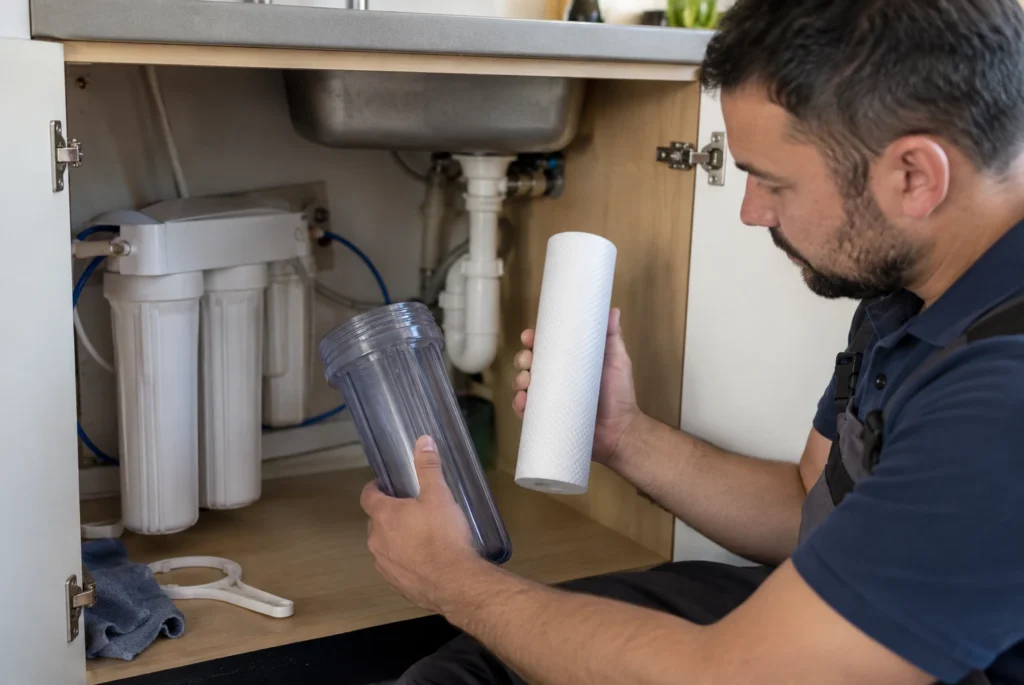
A replacement cartridge that looks similar is not necessarily equivalent.
NSF cautions that even small differences in cartridge dimensions can potentially allow water to travel around a replacement rather than properly through it. The replacement may also lack the same verified materials or contaminant-reduction performance.
Use the cartridge specified for the equipment or a replacement independently verified for that system and application.
4. Check Whether Other Maintenance Is Also Overdue
Depending on the equipment, that might include:
- Other cartridges
- RO membrane evaluation
- System sanitization
- Filter housings and seals
- Treatment media
- UV lamp maintenance if a separate UV system is present
This does not mean every component should automatically be replaced because one cartridge is overdue.
5. Evaluate Flow and System Condition
Look for:
- Continued low flow
- Leaks
- Housing damage
- Bypass problems
- Unusual noises
- Pressure changes
Persistent issues after normal maintenance may justify a broader system inspection.
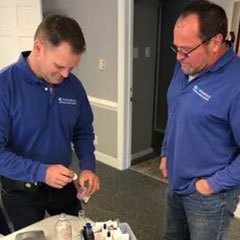
6. Consider Water Testing
Testing becomes particularly useful when:
- The filter is used for a specific contaminant
- Water quality changed
- Maintenance history is unknown
- The property has changed water sources
- An old system has been returned to service
- You are unsure whether the current equipment still matches the water problem
Advanced Water Systems currently lists testing for total coliform and E. coli, nitrates, nitrites, lead, and selected substances including copper and manganese.
Should You Replace the Filter or the Entire System?
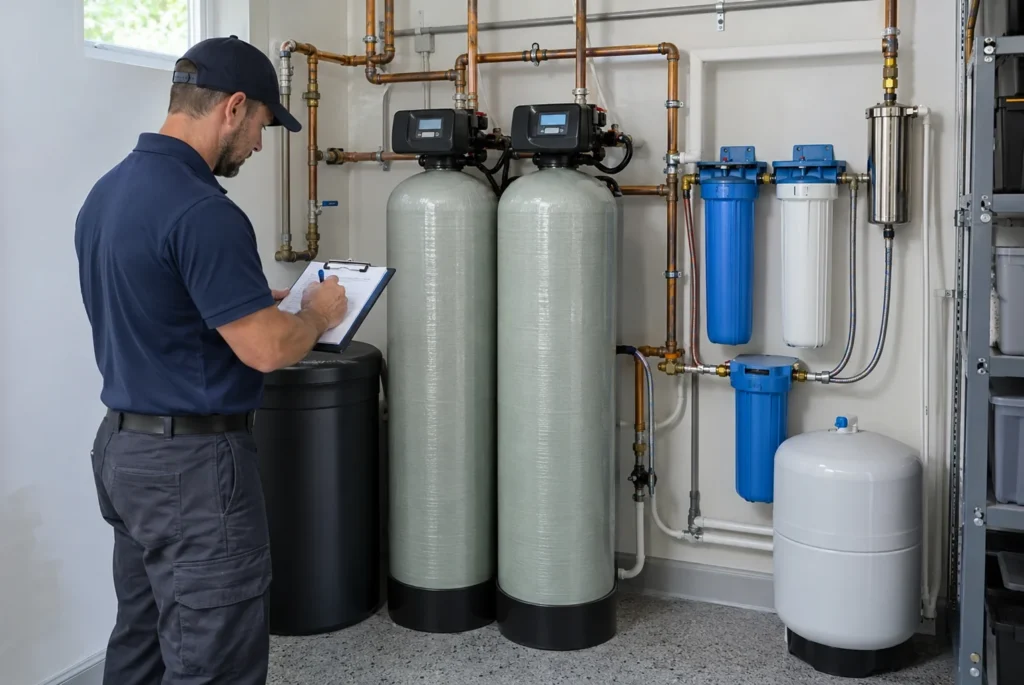
An overdue cartridge does not automatically mean the entire water-treatment system needs to be replaced.
This distinction can save homeowners from treating a maintenance issue as an equipment-replacement issue.
A system evaluation may make sense when:
- The housing is damaged
- Parts are no longer available
- The bypass does not operate properly
- Pressure problems remain after maintenance
- The system repeatedly requires repairs
- The equipment no longer addresses the current water problem
- Water chemistry has changed significantly
- Maintenance history is completely unknown
But a sound treatment system should not be discarded solely because someone forgot to change a replaceable cartridge.
The useful first step is service and evaluation.
How Can You Avoid Missing the Next Filter Change?
A simple record is often enough.
Keep:
- System model
- Replacement cartridge number
- Date installed
- Date changed
- Rated gallons, when applicable
- Manufacturer service interval
- Technician service history
Then set a reminder before the next service point.
If the system has an indicator, use it, but keep your own record as well.
Homeowners researching the broader ownership expense can also review ongoing filter and maintenance costs.
Get Filter Replacement and System Service in Central Virginia
If you cannot remember when your filter was last changed, do not assume it is still performing as intended simply because the water looks clear.
Advanced Water Systems confirms that Central Virginia Kinetico owners can contact the company for filters, materials, manuals, and system service.
Call (877) 609-2837 or request filter replacement or system service to identify the equipment and determine the appropriate next maintenance step.
Frequently Asked Questions
Can an Old Water Filter Make You Sick?
An old filter should not automatically be assumed to cause illness. The better-supported concern is that an overdue filter may become clogged or less effective at performing its intended contaminant reduction. If you are concerned about drinking-water safety, use appropriate testing rather than relying on the age or appearance of the cartridge alone.
Can a Dirty Water Filter Reduce Water Pressure?
Yes. A mechanically loaded cartridge can restrict water flow as its pores become clogged with trapped material. NSF identifies reduced flow as one common sign that mechanical filter capacity has been reached.
What If My Water Still Tastes Fine After Two Years?
Normal taste does not prove the filter remains effective. Some contaminant-reduction performance can decline without producing an obvious taste, odor, or visual change. EPA specifically warns that expired cartridges may be less effective at reducing lead.
Can I Use Any Replacement Cartridge That Fits?
Not necessarily. NSF advises using the proper replacement cartridge because small dimensional differences may allow bypass, and replacement cartridges may not carry the same verified material or contaminant-reduction performance.
Does a Two-Year-Old Filter Mean I Need a New Filtration System?
No. A neglected replaceable cartridge and an obsolete treatment system are different problems. Replace or service the overdue maintenance component first, then evaluate the rest of the system if flow, leaks, performance, parts availability, or water-quality concerns remain.
Should I Test My Water After Replacing a Very Old Filter?
Testing can be useful when the system was intended to reduce a specific contaminant, the maintenance history is unknown, water quality has changed, or you are unsure whether the existing equipment still matches the current water conditions.
External Sources
NSF, Changing Water Filters
Explains mechanical loading, adsorption exhaustion, service cycles, and why the correct replacement cartridge matters.
NSF: Changing Water Filters
U.S. EPA, Will My Filter Remove Lead?
Confirms that filters should be maintained according to manufacturer instructions and that expired filters may become less effective at reducing lead.
EPA: Will My Filter Remove Lead?
U.S. EPA, Learn How to Maintain Your Water Filter
Provides current guidance on using compatible cartridges and replacing filters on schedule.
EPA Water Filter Maintenance Guide
U.S. EPA, Reducing PFAS in Your Drinking Water With a Home Filter
Used to verify that maintenance according to manufacturer schedules is necessary when a certified filter is being relied upon for PFAS reduction.
EPA: Reducing PFAS With a Home Filter